The unsung heroes behind the sweetness: A deep dive into the key components of a candy casting production line
Candy Casting Production Line Overview
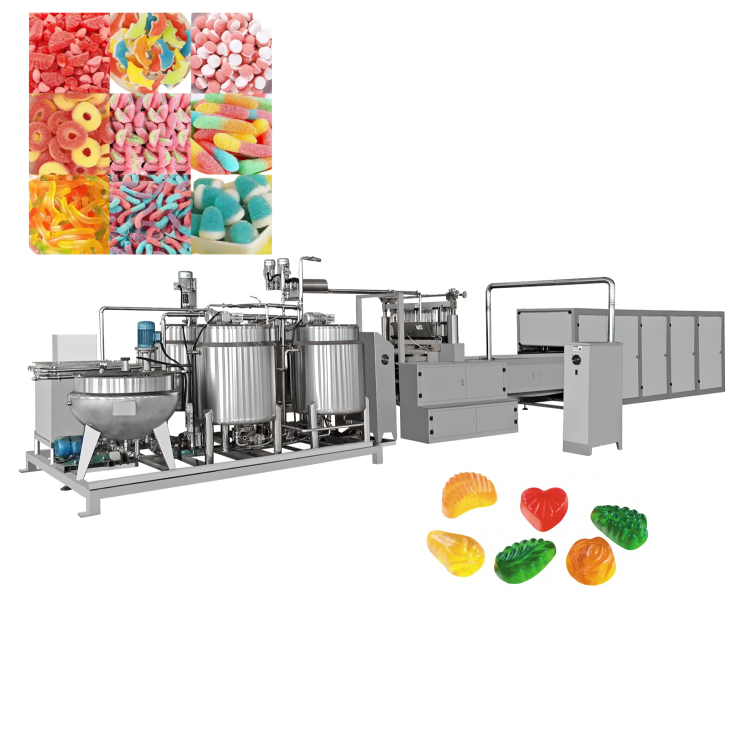
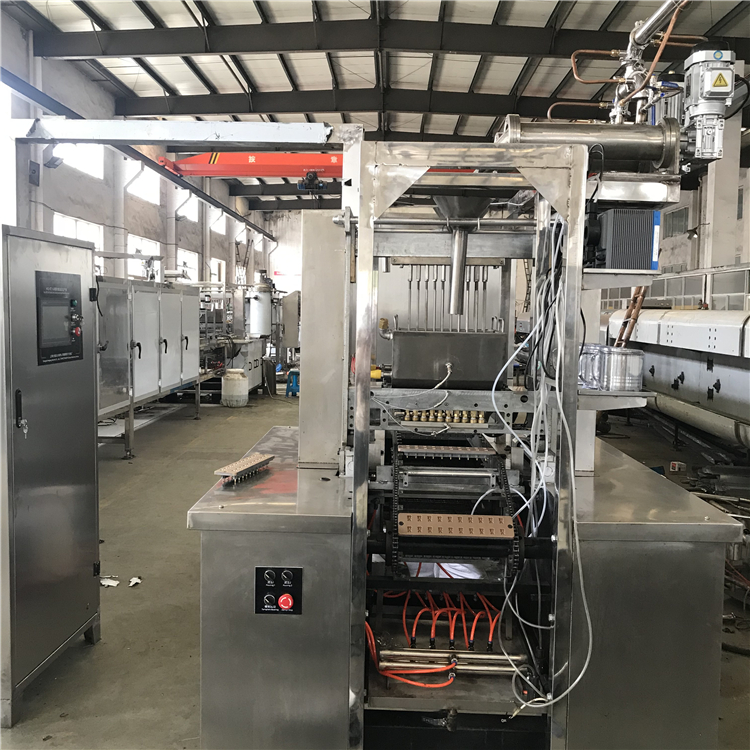
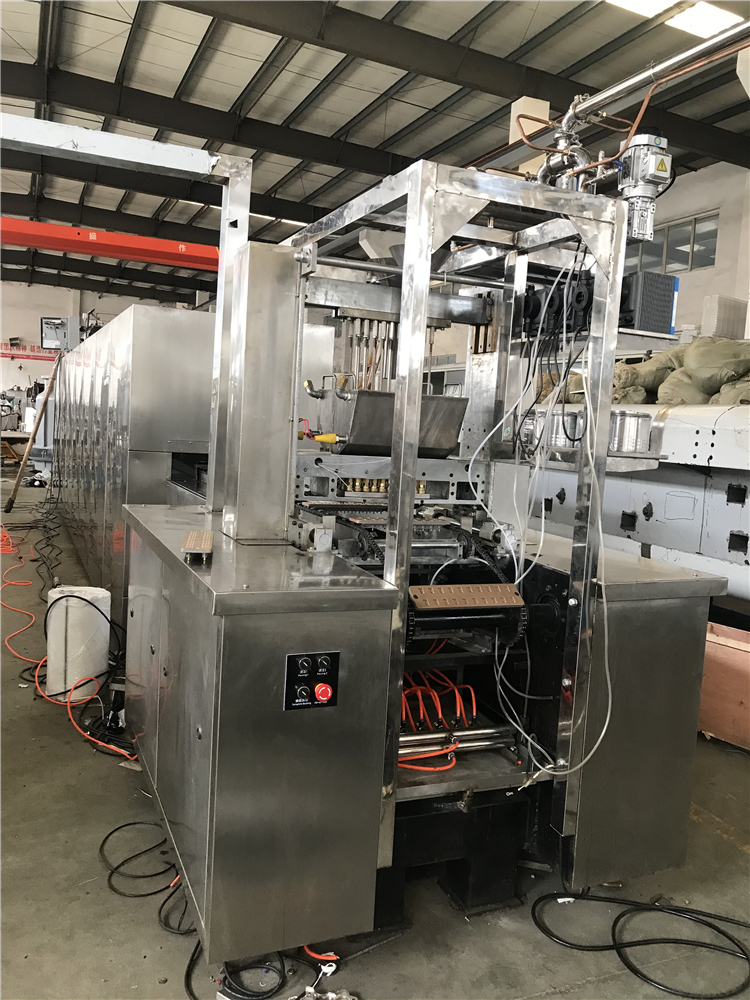
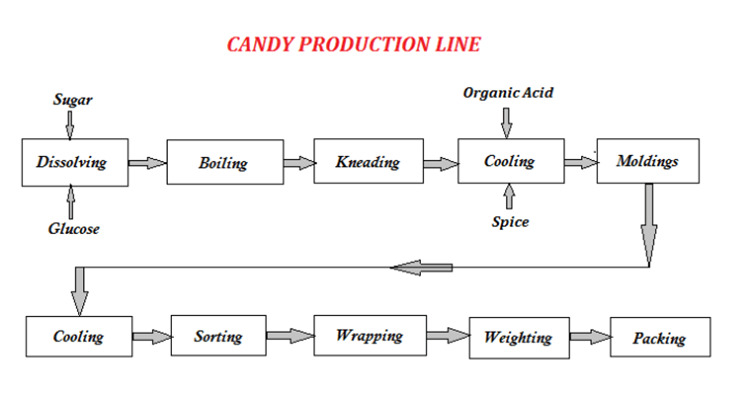
The candy casting production line is a highly automated food processing system designed for the continuous molding and production of soft candies, hard candies, jellies, filled candies, and functional candies. This advanced production line integrates multiple processes, including ingredient mixing, sugar boiling, filtration, vacuum degassing, casting, cooling and setting, demolding, conveying, and packaging. Notably efficient, hygienic, precise, and traceable, it is widely employed in large-scale candy manufacturing enterprises.
Constructed from food-grade stainless steel (such as 304 or 316L), the entire production line adheres to GMP and HACCP food safety standards. Key areas are equipped with a CIP (Clean-in-Place) system to facilitate rapid cleaning and disinfection. The control system typically utilizes a PLC and a touchscreen human-machine interface, offering features like formula storage, parameter adjustment, fault alarms, and production data recording. Some intelligent models can also be integrated with an MES system for remote monitoring and digital management.
Components of the Candy Casting Production Line
I. Raw Material Storage and Pre-treatment System
-
Raw Material Tanks
- Function: Store liquid or semi-liquid raw materials such as syrups, chocolate syrups, and pectin. These tanks are equipped with stirring devices to prevent sedimentation or stratification.
- Features: Typically made of corrosion-resistant stainless steel, these tanks are easy to clean. Some units include heating and insulation functions to maintain the fluidity of raw materials.
-
Transfer Pump
- Function: Draws raw materials from storage tanks and delivers them to the pouring head, ensuring a stable flow rate.
- Type: Gear pumps, screw pumps, or plunger pumps are selected based on the viscosity of the raw materials. High-precision pumps can achieve micro-volume control (e.g., at the 0.1ml level).
-
Filtration and Degassing Device
- Function: Filters impurities from the raw materials (e.g., undissolved sugar granules) and reduces air bubbles through vacuum degassing, preventing pores in the candy's surface after pouring.
II. Pouring System
-
Pouring Head (Molding Head)
- Function: Precisely injects raw materials into the mold cavity, controlling the weight and shape of individual candies.
- Type:
- Single-head pouring: Suitable for simple shapes (e.g., round, square).
- Multi-head pouring: Can operate multiple molds simultaneously, improving production efficiency (e.g., 8-head, 16-head).
- Rotary pouring head: Distributes raw materials through rotation to achieve complex patterns (e.g., spiral, striped).
-
Mold
- Function: Defines the final shape and size of the candy. Materials are typically food-grade silicone or stainless steel.
- Features:
- Changeable Design: Allows for quick mold changes to produce different shapes (e.g., hearts, animal shapes).
- Multi-Cavity Mold: A single mold can contain multiple cavities, further enhancing production capacity.
-
Pouring Control Unit
- Function: Precise control over the pouring volume, speed, and timing via PLC or servo motors, ensuring consistent weight for each candy.
- Advanced Functions: Supports recipe storage (recalling pouring parameters for various products), real-time monitoring, and alarm systems.
III. Molding and Cooling System
-
Conveyor Belt
- Function: Transports poured candy from the mold to the cooling zone. Typically made from high-temperature resistant, non-stick materials (e.g., Teflon coating).
- Features: Variable frequency speed control, synchronized with the pouring speed to prevent material overflow or stringing.
-
Cooling Tunnel
- Function: Rapidly reduces candy temperature through cold air or cold water circulation, allowing it to solidify and set.
- Types:
- Air-cooled Tunnel: Ideal for products that require rapid cooling, such as chocolate and hard candy.
- Water-cooled Tunnel: Offers higher cooling efficiency but requires an additional drying step.
- Parameter Control: Adjustable temperature (-5℃ to 20℃), air speed, and cooling time according to raw material characteristics.
-
Demolding Device
- Function: Automatically removes solidified candy from molds, minimizing manual intervention.
- Methods:
- Vibration Demolding: Loosens candy using mechanical vibrations.
- Pneumatic Demolding: Uses compressed air to eject candy; ideal for complex shapes.
IV. Decoration and Packaging System (Optional)
-
Surface Decoration Equipment
- Function: Performs operations such as spraying (e.g., chocolate coating), sprinkling sugar granules, and printing on candy surfaces, thereby increasing product value.
- Examples: Chocolate rotary coating machines, sugar coating spray guns, and laser engraving machines.
-
Packaging Machine
- Function: Automatically loads finished candies into packaging bags, boxes, or trays, completing the sealing and labeling processes.
- Types:
- Pillow-type Packaging Machine: Suitable for individual packaging of single candies.
- Multi-row Packaging Machine: Can package multiple candies simultaneously, boosting efficiency.
- Pre-packaging Bag Machine: Flexibly adapts to various bag types (e.g., stand-up pouches, zipper bags).
V. Control System and Auxiliary Equipment
-
Central Control Cabinet
- Function: Integrates PLC, touchscreen, and sensors for fully automated control, including parameter setting, fault diagnosis, and data recording.
- Features: Supports remote monitoring and IoT functionality for efficient production management.
-
Cleaning System (CIP)
- Function: Automatically cleans raw material pipes, pouring heads, and molds to prevent cross-contamination and maintain hygiene.
- Process: Typically involves pre-rinsing, alkaline washing, acid washing, and clean water rinsing.
-
Waste Recycling Device
- Function: Collects overflowing raw materials or defective products during pouring for recycling and reuse, minimizing wastage.
VI. Safety and Environmental Protection Equipment
-
Protective Covers and Safety Light Barriers
- Function: Prevent operators from contacting moving parts (e.g., pouring heads, conveyor belts), thereby avoiding mechanical injuries.
-
Exhaust Gas Treatment Device
- Function: Treats steam and odors generated during the cooling process, ensuring air quality within the workshop.
-
Noise Control Measures
- Use low-noise motors and soundproof enclosures to reduce equipment operating noise (typically ≤75dB).
This polished version aims to enhance clarity, coherence, and professional tone while maintaining all relevant technical information.