New secrets for candy factories: Tips for making candy casting production lines run efficiently!
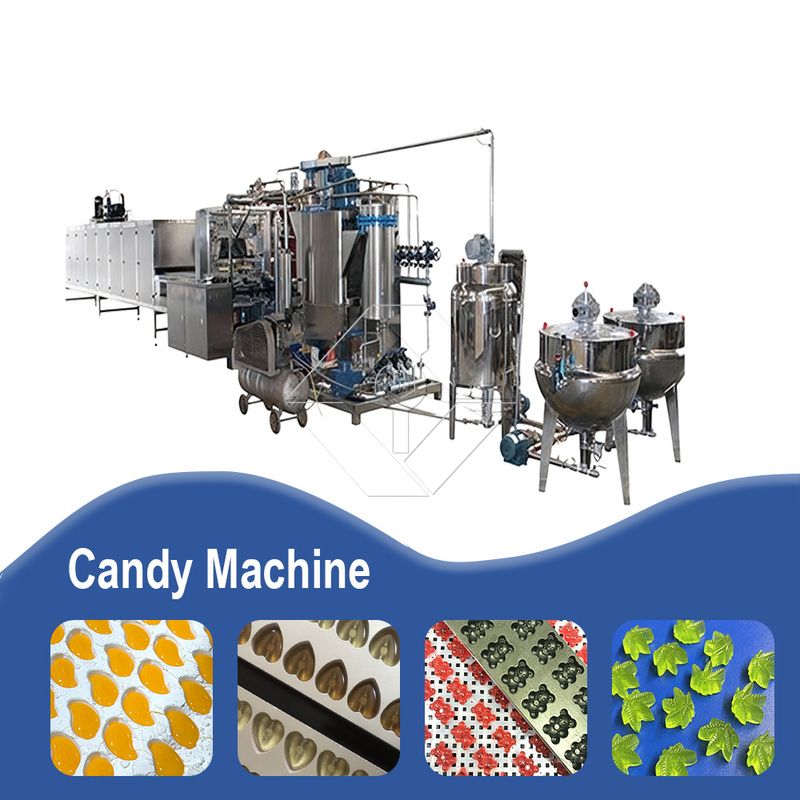
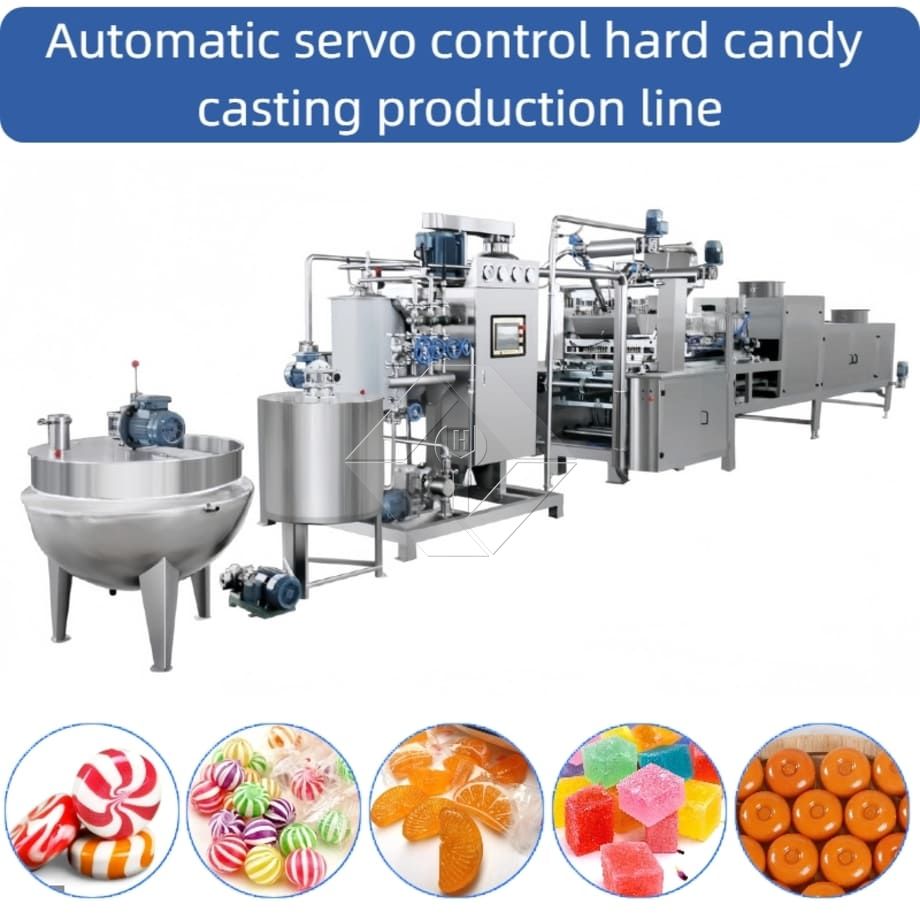
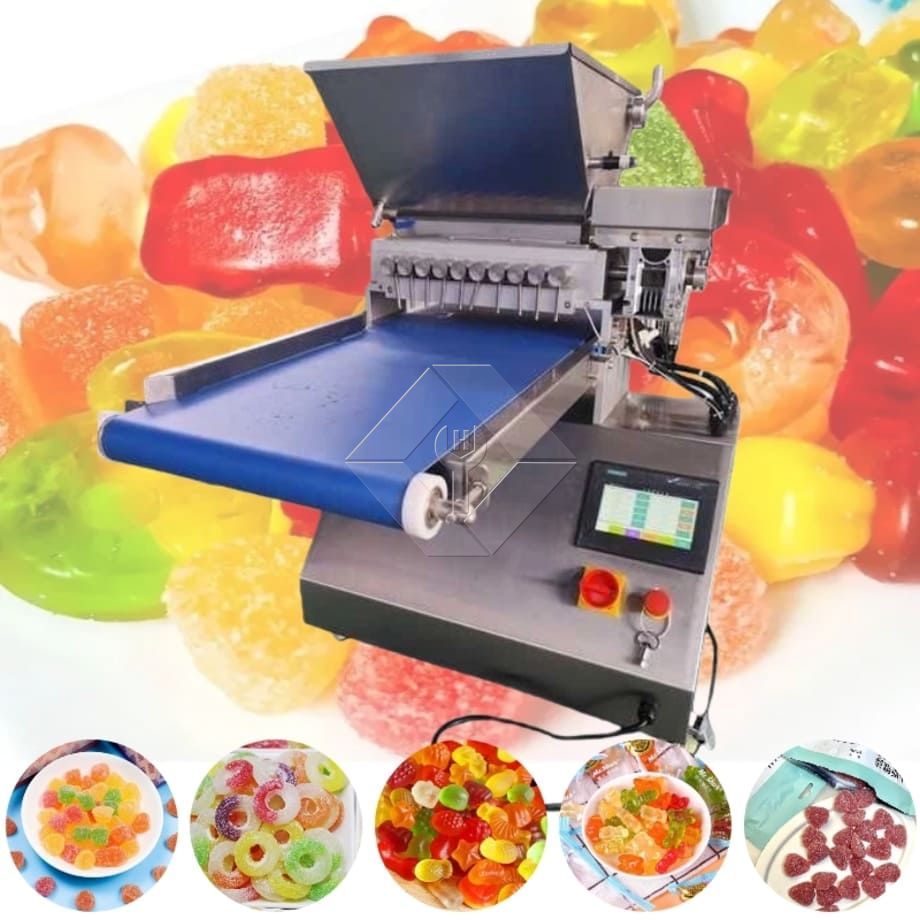
The candy casting production line is a highly automated food processing equipment specifically designed for the continuous molding and production of products such as soft candies, hard candies, jellies, filled candies, and functional candies. This production line integrates multiple processes including ingredient mixing, sugar boiling, filtration, vacuum degassing, casting, cooling and setting, demolding, conveying, and packaging. It features high efficiency, hygiene, precision, and traceability, and is widely used in large-scale production in candy manufacturing enterprises.
The entire production line is constructed using food-grade stainless steel (such as 304/316L), complying with GMP and HACCP food safety standards. Key areas are equipped with a CIP (Clean-in-Place) system for rapid cleaning and disinfection. The control system typically uses a PLC + touchscreen human-machine interface, supporting formula storage, parameter adjustment, fault alarms, and production data recording. Some intelligent models can also be integrated with an MES system for remote monitoring and digital management.
Precautions during the candy casting production line:
1. Raw Material Management
Raw Material Quality: Before use, check raw materials for expiration, spoilage, or impurities; avoid mixing different batches of raw materials to prevent color/taste differences.
Temperature Control: Syrups, chocolate syrups, and other raw materials must be maintained within the set temperature range (e.g., chocolate casting temperature is typically 30-35℃) to prevent solidification or poor flowability.
Flow Rate Monitoring: Regularly check the delivery pump pressure and casting head flow rate to avoid unstable casting volume due to blockage or pump malfunction.
2. Mold and Molding Control
Mold Temperature: Some molds require preheating to a specific temperature (e.g., chocolate molds need to be cooled to 15-20℃) to ensure rapid candy demolding and a smooth surface.
Cooling Efficiency: Monitor the cooling tunnel temperature and airflow to avoid insufficient cooling leading to candy deformation or sticking; in summer, increase ventilation or cooling time.
Demolding Inspection: Check the demolding rate after each batch of production. If sticking occurs, adjust demolding parameters (e.g., vibration frequency, air pressure) or clean the mold. 3. Real-time Quality Monitoring
Weight Inspection: Use online weighing equipment or manual sampling to ensure that the weight of each candy meets the standard (deviation ≤ ±1%).
Appearance Inspection: Observe whether the candy surface is smooth, free of bubbles, cracks, or deformation; promptly remove defective products and analyze the cause (e.g., excessively high pouring temperature, excessively rapid cooling).
Packaging Integrity: Check the packaging seal and label placement to avoid air leaks or incorrect information.
Related Products