The Unsung Heroes Behind Sweetness: A Deep Dive into the Core Components of Candy Casting Production Line
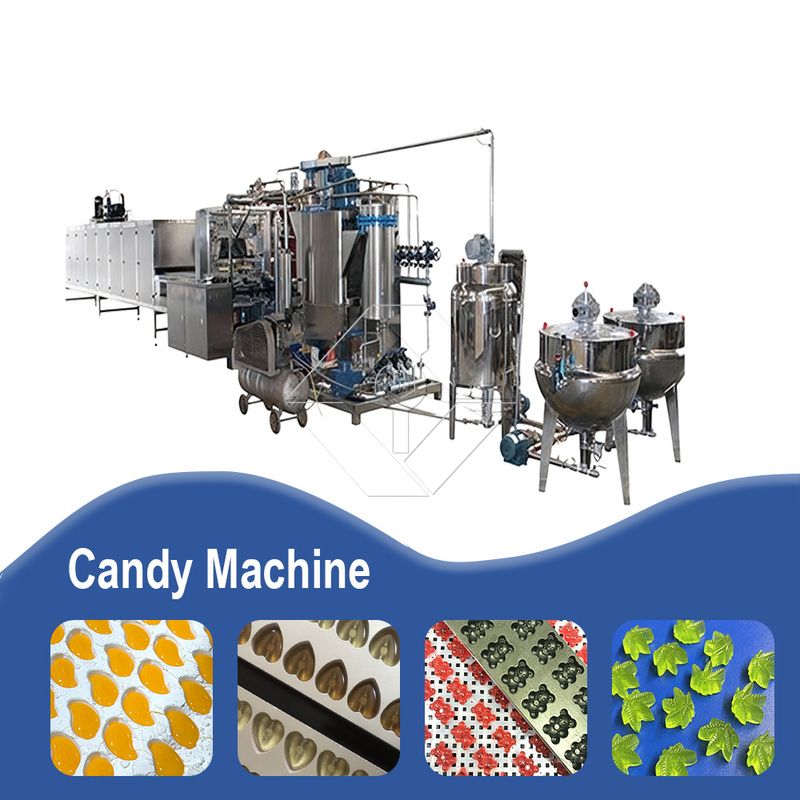
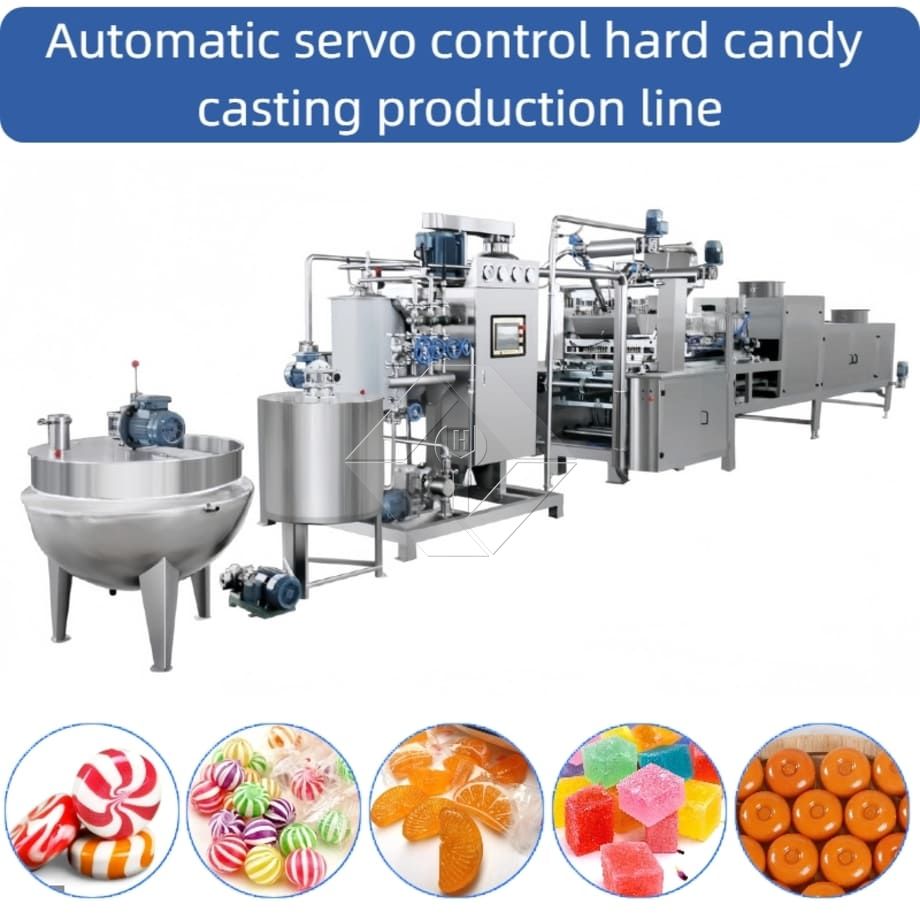
Candy Casting Production Line
The candy casting production line is a highly automated food processing equipment dedicated to the continuous forming and production of gummies, hard candies, jellies, filled candies, functional candies and other related products. Integrating multiple process links including batching & mixing, sugar cooking, filtration, vacuum degassing, casting forming, cooling & setting, demolding, conveying and packaging, it features high efficiency, hygiene, precision and traceability, and is widely applied in the large-scale production of candy manufacturing enterprises.
The entire production line is made of food-grade stainless steel (e.g. 304/316L), complying with GMP and HACCP food safety standards. Key areas are equipped with a CIP (Clean-in-Place) system for quick cleaning and disinfection. The control system mostly adopts a PLC + touch screen human-machine interface (HMI), supporting recipe storage, parameter adjustment, fault alarm and production data recording. Some intelligent models can also be connected to the MES system to realize remote monitoring and digital management.
Components of the Candy Casting Production Line
1. Raw Material Storage and Preprocessing System
Raw Material Tanks
Function: Store liquid or semi-liquid raw materials such as syrup, chocolate paste and pectin, equipped with agitating devices to prevent sedimentation and delamination.Features: Usually made of stainless steel for corrosion resistance and easy cleaning; some equipment is equipped with heating/insulation functions to maintain raw material fluidity.
Transfer Pumps
Function: Extract raw materials from storage tanks and deliver them to the casting head to ensure stable flow rate.Types: Gear pumps, screw pumps or plunger pumps are selected according to raw material viscosity; high-precision pumps can achieve micro-dosing control (e.g. 0.1ml level).
Filtration and Degassing Devices
Function: Filter impurities (e.g. undissolved sugar grains) in raw materials and reduce air bubbles through vacuum degassing to avoid holes on the candy surface after casting.
2. Casting System
Casting Head (Molding Nozzle)
Function: Precisely inject raw materials into mold cavities and control the weight and shape of individual candies.Types:
- Single-head casting: Suitable for simple shapes (e.g. round, square).
- Multi-head casting: Can cast multiple molds simultaneously to improve production efficiency (e.g. 8-head, 16-head).
- Rotary casting head: Distribute raw materials through rotation to create complex patterns (e.g. spiral, stripe).
Molds
Function: Define the final shape and size of candies, usually made of food-grade silicone or stainless steel.Features:
- Replaceable design: Molds can be quickly replaced to produce different shapes (e.g. heart, animal) as required.
- Multi-cavity molds: A single mold contains multiple cavities to further increase output.
Casting Control Unit
Function: Precisely control casting volume, speed and time through PLC or servo motors to ensure consistent weight of each candy.Advanced Functions: Support recipe storage (retrievable casting parameters for different products), real-time monitoring and alarm.
3. Forming and Cooling System
Conveyor Belt
Function: Convey cast molds to the cooling zone, usually made of high-temperature resistant and non-stick materials (e.g. Teflon coating).Features: Variable frequency speed regulation, synchronized with casting speed to prevent raw material overflow and stringing.
Cooling Tunnel
Function: Rapidly lower candy temperature through cold air or cold water circulation to realize solidification and forming.Types:
- Air-cooled tunnel: Suitable for products requiring rapid cooling such as chocolate and hard candies.
- Water-cooled tunnel: Higher cooling efficiency, with an additional drying step required.Parameter Control: Temperature (adjustable from -5℃ to 20℃), air speed and cooling time can all be adjusted according to raw material characteristics.
Demolding Device
Function: Automatically demold solidified candies from molds to reduce manual intervention.Methods:
- Vibration demolding: Loosen candies through mechanical vibration.
- Pneumatic demolding: Eject candies with compressed air, suitable for complex shapes.
4. Decoration and Packaging System (Optional)
Surface Decoration Equipment
Function: Perform surface processing on candies such as spraying (e.g. chocolate coating), sugar sprinkling and printing to increase product added value.Examples: Chocolate turntable coating machine, sugar coating spray gun, laser engraving machine.
Packaging Machine
Function: Automatically pack finished candies into bags, boxes or trays, and complete sealing, labeling and other processes.Types:
- Pillow packaging machine: Suitable for individual packaging of single candies.
- Multi-lane packaging machine: Can pack multiple candies simultaneously to improve efficiency.
- Pouch feeding packaging machine: Flexibly adapt to different bag types (e.g. stand-up pouches, zipper bags).
5. Control System and Auxiliary Equipment
Central Control Cabinet
Function: Integrate PLC, touch screen and sensors to realize full-line automatic control, including parameter setting, fault diagnosis and data recording.Features: Support remote monitoring and Internet of Things (IoT) functions for convenient production management.
CIP Cleaning System
Function: Automatically clean raw material pipelines, casting heads and molds to avoid cross-contamination and comply with food hygiene standards.Process: Usually including pre-rinsing, alkaline washing, acid washing, clean water rinsing and other steps.
Waste Recovery Device
Function: Collect spilled raw materials or defective products during casting for recycling and reuse to reduce material loss.
6. Safety and Environmental Protection Equipment
Protective Covers and Safety Light Curtains
Function: Prevent operators from contacting moving parts (e.g. casting heads, conveyor belts) to avoid mechanical injuries.
Waste Gas Treatment Device
Function: Treat steam or peculiar smell generated during the cooling process to ensure air quality in the production workshop.
Noise Control
Measures: Adopt low-noise motors, sound insulation covers, etc. to reduce equipment operating noise (usually ≤75dB).