Biscuit Machinery Factory: Food Machinery Pollution Control
Jan. 22, 2026
The Biscuit Machinery Factory Discusses Prevention and Control Measures for Food Processing Machinery Pollution
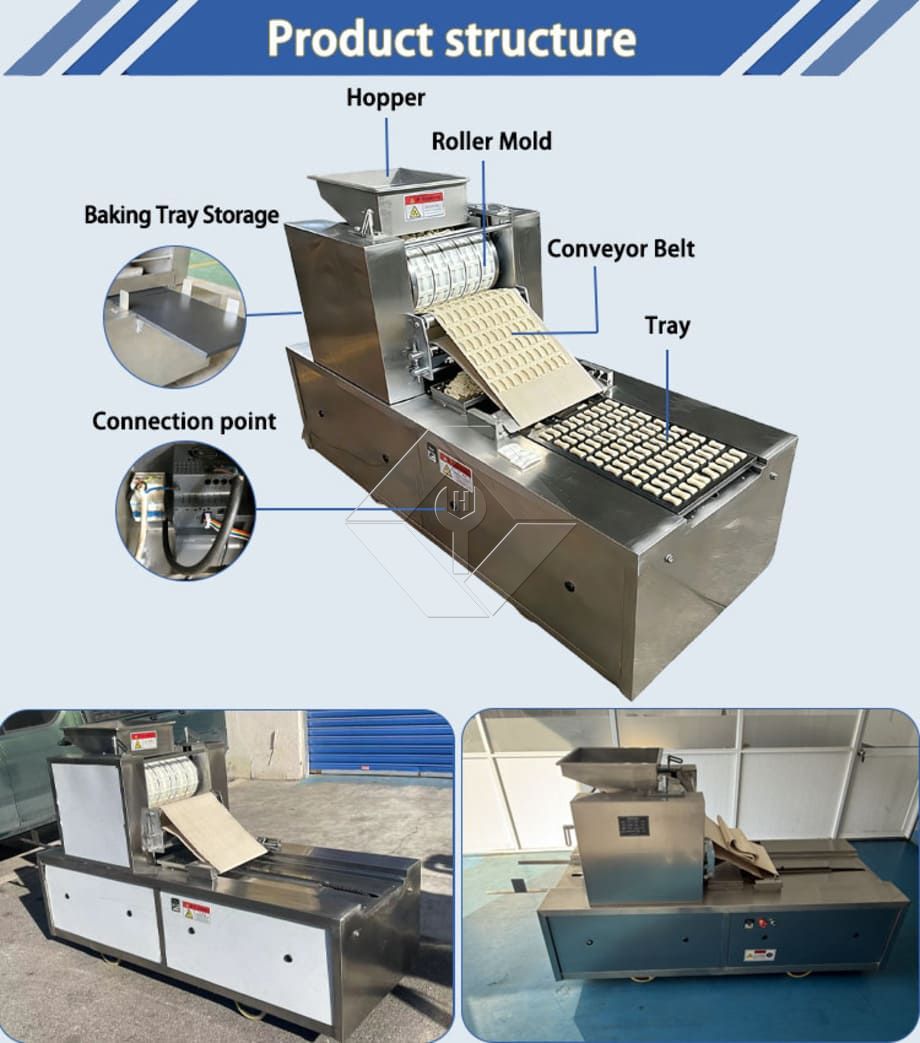 The secondary pollution of food by food processing machinery is extremely serious. Preventing and controlling the contamination of food processing machinery is one of the important measures to ensure food hygiene and safety.
1.Elements Affecting Food Quality
The quality of food is related to the physical and mental safety of the nation. To produce qualified food, three elements must be present:
(1)Qualified personnel;
(2)Software that complies with GMP operating specifications, such as reasonable process formulas and operation procedures, qualified raw and auxiliary materials, various specifications and management systems, etc.;
(3)Hardware for QS sanitary production, including a qualified production environment and production conditions, compliant factory buildings, equipment, etc.
2.The meaning of food equipment's prevention and control of pollution during production
As can be seen from the above, the production environment, production conditions, and equipment are one aspect of the factors affecting food quality. In food production, the pollution of the production environment and production conditions generally includes microorganisms, dust, particles, corrosion, errors, and cross - contamination, etc. The prevention and control of pollution in production by food processing machinery contains two meanings. First, the processing machinery itself should not contaminate food nor the environment. Second, it should have effective means of controlling pollution. Therefore, GMP has made several guiding regulations for processing machinery directly involved in food production. The basic point is to ensure food quality, prevent various possible pollutions to food during the production process, as well as factors that may affect the environment and human health. Therefore, the design of food processing machinery should meet the requirements of GMP, reduce pollution factors, and have good prevention and control of pollution. Although the country has not imposed mandatory GMP certification requirements on food enterprises, food machinery manufacturing enterprises should provide food enterprises with equipment that can prevent or easily prevent and control pollution.
3.The design of food processing machinery meets the requirements of GMP.
Food processing equipment under the specific conditions of GMP should learn from the product design, manufacturing, technology, performance and other aspects of food processing equipment. The General Rules for GMP Design of Equipment should be taken as the guideline to promote the establishment and improvement of the GMP specifications for food equipment.
The specific contents are as follows
(1) The design of the equipment should meet the requirements of food production and technology, be safe, stable, reliable, easy to clean, disinfect or sterilize, convenient for production operation and maintenance, and prevent errors and cross - contamination.
(2) The selection of equipment materials should be strictly controlled. The parts in direct contact with semi - finished or finished food products should be made of materials that are non - toxic, non - corrosive, do not react chemically with food, do not release particles or adsorb food.
(3) For the inner surface of the equipment in direct contact with food and the surfaces of working parts, as much as possible, platforms, grooves and exposed bolt connections should not be designed. The surface should be flat, smooth, *, easy to clean and disinfect.
(4) The equipment should not pollute the environment outside the device. Given that the pollution generated by each type of equipment is different, relevant measures such as dust prevention, leakage prevention, heat insulation and noise prevention should be taken.
(5) Equipment used in flammable and explosive environments should use explosion - proof electrical appliances and be equipped with anti - static and safety insurance devices.
(6) The filling or dispensing equipment for high - protein beverages should operate in a corresponding clean room, and 1000 - class laminar clean air and positive pressure protection should be adopted locally.
(7) The design of pipelines for beverages, purified water and purified compressed air should avoid dead ends and blind pipes. The materials should be non - toxic and corrosion - resistant. The inner surface should be electro - polished and easy to clean.
(8) When a small amount of foreign matter is generated by driving friction or when the use of lubricants is unavoidable, the components should be sealed and isolated from the workroom. The lubricants used should not contaminate food, packaging containers, etc.
(9) For the cleaning of sterile equipment, especially the sterilization of parts and components in direct contact with food, the sterilization date should be marked, and the aseptic effect should be verified if necessary. The equipment cleaning is equipped with CIP and SIP systems.
(10) The equipment design should meet the requirements of standardization, generalization, serialization and mechatronics. Achieving continuous and closed - loop production processes and automatic detection is the guarantee for the full implementation of equipment GMP.
Related News
Jan. 13, 2026
Nov. 10, 2025