
How to Solve the Following Problems if a Two-Color Cookie Maker Encounters them?
It introduces the attributes of this special baking equipment for making two-color cookies, and its structural features including a control system, a core feeding system (with multiple sets of independent control pipes), a pressure system, and an oven. Then, it targets four major types of problems that may occur during equipment operation—extrusion issues (uneven color, flow interruption), forming issues (shape distortion, blurred boundaries), equipment failures (jamming, temperature control failure), and cleaning/maintenance issues (difficult-to-clean residues, part corrosion)—explaining the causes and corresponding solutions one by one, thus providing guidance for the use and maintenance of the equipment.
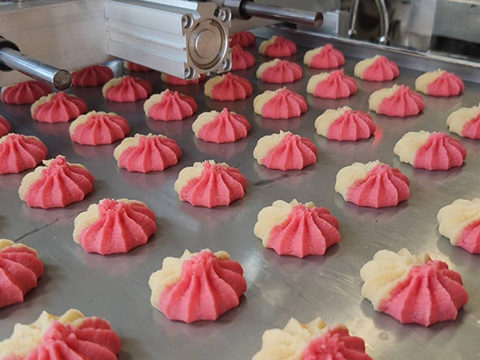
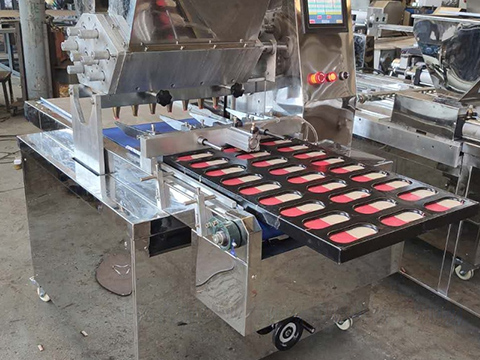
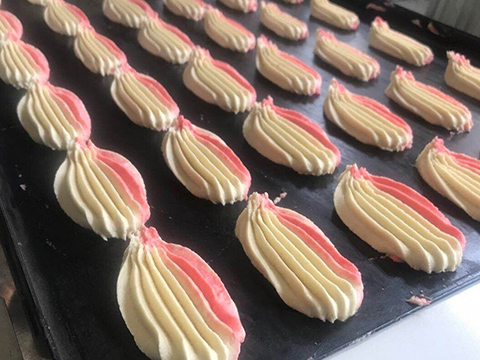
A two-color cookie machine is a special baking equipment used to make two-color cookies. It usually consists of two or more independent feeding systems to separately feed doughs of different colors and flavors into cookie molds. Typically, it is composed of a control system, feeding system, pressure system, and oven, among which the feeding system is one of the most important components. It usually includes two or more feeding pipes, each of which can independently control the inlet and outlet of dough. This means operators can adjust the speed and position of each feeding pipe as needed to achieve the desired formula and shape.
The following are common problems and solutions that may occur during the operation of a two-color cookie machine:
Extrusion Issues
Problem: Uneven mixing of two colors with color stratificationCauses:
● Significant differences in viscosity or hardness between the two doughs, preventing uniform fusion during extrusion.
● Unreasonable design of the machine's extrusion outlet (e.g., dual-cavity channels not tightly fitted).
Solutions:
● Adjust the moisture content or butter ratio of the two doughs to make their viscosities consistent.
● Inspect and clean the extrusion outlet to ensure dual-cavity channels are aligned and unobstructed.
Problem: Intermittent or discontinuous extrusionCauses:
● Dough is too dry or too wet, resulting in poor fluidity.
● Mismatched rotation speed of the screw conveyor, leading to unstable pressure.
Solutions:
● Optimize the dough formula (e.g., appropriately add egg liquid or milk to adjust humidity).
● Adjust the machine's rotation speed to ensure synchronized extrusion of the two-color doughs.
Molding Issues
Problem: Distorted cookie shape or stickingCauses:
● Uneven oven temperature, causing cookies to soften and deform.
● Excessive fat content in the dough, leading to over-spreading after extrusion.
Solutions:
● Preheat the oven to an appropriate temperature (usually 180°C~200°C) to ensure uniform heating.
● Reduce butter dosage or increase flour proportion to adjust dough hardness.
Problem: Blurred or smudged boundary between two colorsCauses:
● Insufficient color saturation of the two doughs (e.g., insufficient pigment addition).
● Excessive standing time after extrusion, causing color penetration.
Solutions:
● Increase the amount of food coloring (e.g., gel coloring) to ensure vivid colors.
● Put the extruded dough into the oven immediately for baking to avoid prolonged exposure to air.
Equipment Malfunction Issues
Problem: Machine jamming or abnormal motor noiseCauses:
● Hard objects in the dough (e.g., sugar chunks, flour lumps) blocking the extrusion outlet.
● Insufficient lubrication of the screw conveyor, resulting in excessive friction.
Solutions:
● Stop the machine to clean the extrusion outlet and conveyor, and check if the dough is uniform.
● Regularly lubricate transmission parts (e.g., food-grade silicone oil).
Problem: Heating tube failure or temperature control malfunctionCauses:
● Damaged heating tube or poor contact.
● Thermostat failure or sensor malfunction.
Solutions:
● Replace the heating tube and check if the wiring is secure.
● Calibrate or replace the thermostat to ensure accurate temperature display.
Cleaning and Maintenance Issues
Problem: Hardened residual dough that is difficult to cleanCauses:
● Failure to clean in a timely manner, causing dough to dry and adhere to the machine interior.
● Rinsing oily residues with water, leading to oil solidification.
Solutions:
● Wipe the machine body with hot water (+ a small amount of detergent) to soften residual dough.
● Regularly disassemble key components (e.g., extrusion outlet, conveyor) for deep cleaning.
Problem: Rusting or corrosion of partsCauses:
● Failure to dry water after cleaning, causing oxidation of metal parts.
● Long-term contact with acidic ingredients (e.g., jam, yogurt) accelerating corrosion.
Solutions:
● Thoroughly dry or air-dry the equipment after cleaning; apply cooking oil for rust prevention if necessary.
● Choose food-grade stainless steel accessories to reduce corrosion risks.